





How to Price Custom Orders for Maximum Profit (Without Underselling Yourself)
If you’ve ever wrapped up a custom order and had that quiet thought, “I definitely should’ve charged more for this”, you’re in very good company.
Pricing is one of the most stressful parts of running a craft business, especially when you’re creating something by hand. It’s easy to default to what “feels fair” or what you think customers will accept, but that often leads to doing a lot of work without actually seeing the profit you deserve.
The truth is, pricing custom orders doesn’t have to feel like guesswork. Once you understand what actually goes into your cost, it becomes a lot more clear—and a lot more empowering.
Let’s walk through it in a simple, realistic way.
It always starts with materials (but it’s more than people think)
When most makers think about pricing, they immediately jump to the obvious things like blanks, vinyl, HTV, sublimation supplies, or foil. And yes, those absolutely matter.
But materials are usually a little sneakier than they first appear.
It’s not just the main product it’s also the small things you don’t think about in the moment. Transfer tape, extra vinyl you cut but don’t use, packaging materials, ink, test cuts, even the little bit of waste that happens when something doesn’t go perfectly the first time.
Individually, those costs feel small. But across multiple orders, they add up fast.
So when you’re pricing a custom order, it helps to think less like “what did this sheet cost me?” and more like “what did it actually take to produce this finished product?”
That shift alone makes a big difference.
Your time matters more than you probably think it does
This is where a lot of craft business owners unintentionally underprice themselves.
Because you’re used to doing the work, it can start to feel normal—not valuable. But every custom order takes time, even the simple ones.
There’s designing, cutting, weeding, pressing, assembling, packaging, and often communication with the customer along the way. None of that happens instantly, and none of it should be invisible in your pricing.
A helpful mindset shift is this: you’re not just selling a finished product you’re selling your skill, your creativity, and your time.
And once you start accounting for that, pricing usually starts to make a lot more sense.
The cost of running your business (even when you’re not actively creating)
Then there’s the part most people forget completely: overhead.
Even if you’re not working on an order, your business still has costs. Equipment wears down over time, software subscriptions keep running, electricity gets used, and packaging supplies don’t magically appear for free.
These costs don’t belong to just one product but they do need to be covered somewhere.
A lot of successful craft business owners quietly build this into their pricing so they’re not constantly playing catch-up later. It doesn’t have to be complicated. It’s really just making sure your business is actually supporting itself, not just your materials.
Profit is what actually lets your business grow
This part is where everything comes together.
Profit isn’t the “extra” part of your price it’s the part that makes everything sustainable.
It’s what allows you to reinvest in better supplies, upgrade equipment, run ads, or simply pay yourself consistently for your work.
If you’re only covering materials and time, you’re essentially running on break-even mode. And while that might feel okay short-term, it makes it really hard to grow or stay motivated long-term.
Healthy craft businesses build profit into their pricing from the beginning, not as an afterthought.
When it all clicks together
Once you start thinking about pricing in this more complete way materials, time, overhead, and profit it stops feeling like random number picking.
Instead, it becomes a system. A repeatable way to make sure every order is actually supporting your business instead of draining it.
And something interesting usually happens when you make that shift: you start feeling more confident quoting prices. Because you’re no longer guessing you’re just explaining the value of what you already know goes into your work.
Final thoughts
Pricing custom orders isn’t just about numbers. It’s about mindset.
It’s learning to stop underestimating your time, your skill, and the real cost of running a business behind the scenes.
And the more confidently you price your work, the more space you create to actually enjoy the creative part of what you do.
Because at the end of the day, the most successful craft businesses aren’t the ones charging the least—they’re the ones pricing with intention.
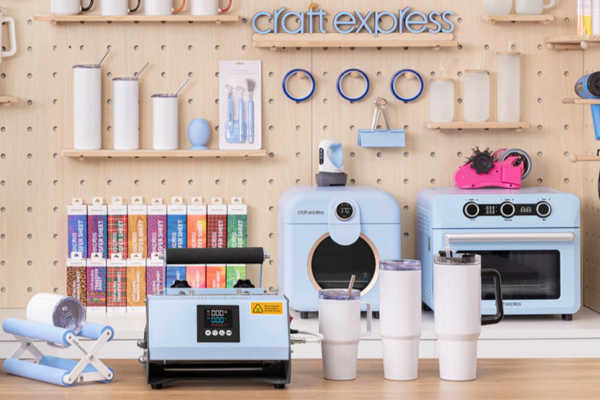
Ready to start your handmade sublimation, VersiFlex, DTF or HTV business? Head to craftexpressus.com for heat presses, blanks, supplies and more!


Leave a comment
This site is protected by hCaptcha and the hCaptcha Privacy Policy and Terms of Service apply.