


An Introduction to Craft Printing Inks: What They Are and How They Work
If you are new to craft printing, inks can feel confusing at first. Sublimation ink, VersiFlex ink, standard ink, they all sound similar, but they are designed to do very different jobs. Choosing the right ink is one of the most important steps you can take, because ink determines what materials you can decorate and how your finished projects will look and last.
This beginner friendly guide introduces craft printing inks in plain language so you can understand what each one does, when to use it, and how to set yourself up for success from the start.
Why Ink Matters More Than You Think
Ink is the foundation of every printed project. No matter how good your heat press or blanks are, the ink you choose controls:
-
What materials you can print on
-
How vibrant your colors appear
-
How durable your finished design will be
-
How predictable your results are
Using the right ink helps eliminate guesswork and makes crafting feel more confident instead of frustrating.
The Two Most Common Craft Printing Inks
Sublimation Ink
Sublimation ink is designed to turn into a gas when heat is applied. Instead of sitting on top of the surface, it bonds directly with polyester fibers or polymer coatings.
Sublimation ink works best on:
-
Polyester fabric
-
Sublimation coated mugs and tumblers
-
Coated hard goods like metal panels
Why crafters love sublimation:
-
No texture or feel on fabric
-
Extremely durable results
-
Bright colors on light backgrounds
Sublimation does not work on cotton or untreated natural materials, which is important to know before choosing blanks.
VersiFlex Ink
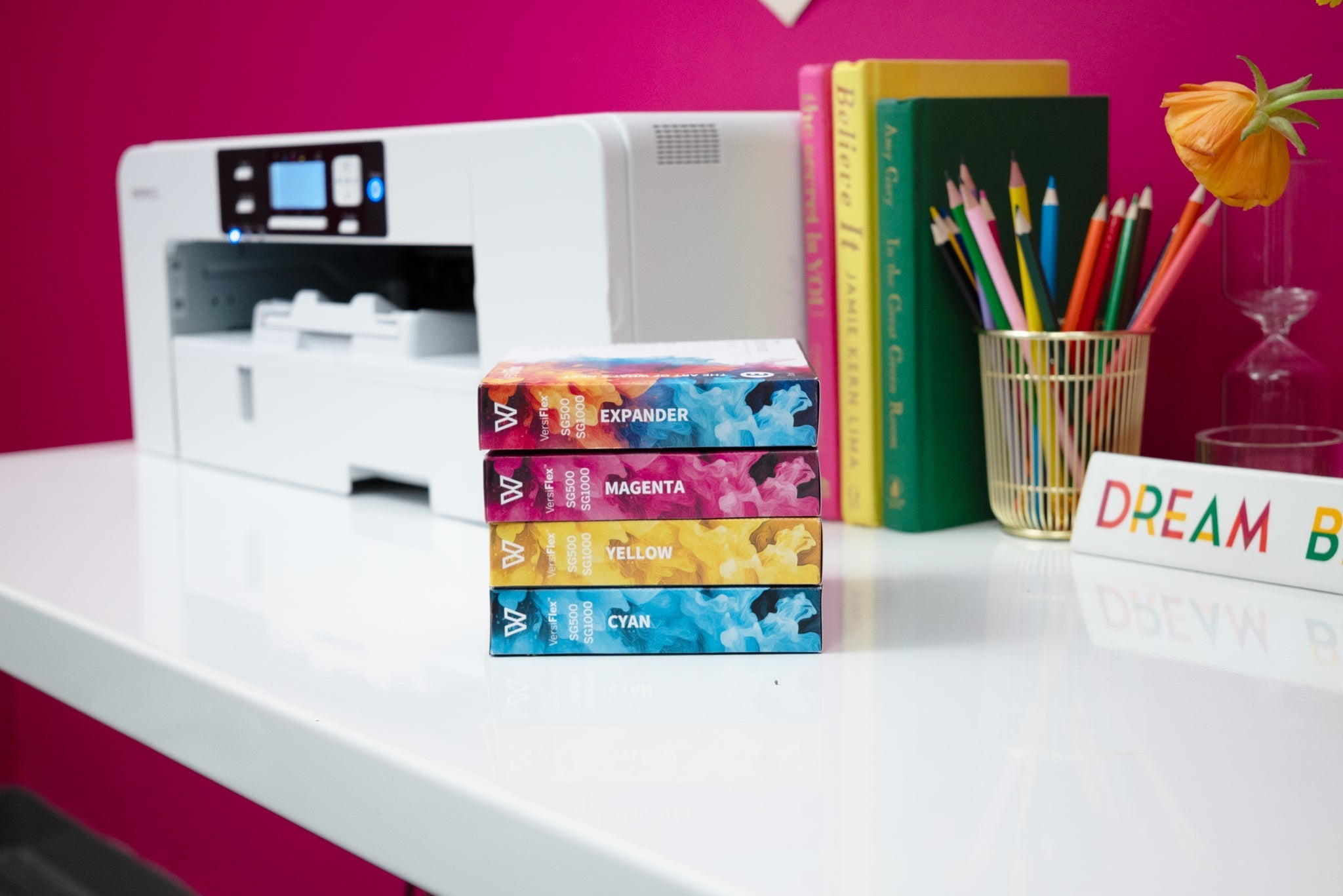
VersiFlex ink is designed for materials sublimation cannot handle. It creates a transfer that sits on top of porous surfaces and bonds with heat and pressure.
VersiFlex ink works well on:
-
Cotton and cotton blend apparel
-
Canvas bags and fabric decor
-
Unfinished or lightly sanded wood
VersiFlex is popular because:
-
No pretreatment is required
-
It opens the door to cotton products
-
It allows more creative product variety
Reliable pressing is especially important with VersiFlex, which is why many makers pair it with Craft Express heat presses.
Ink Types Are Not Interchangeable
One of the most important rules in craft printing is this: never mix ink types in the same printer.
Each ink set is chemically different. Mixing inks can:
-
Damage print heads
-
Clog ink lines
-
Cause unpredictable color results
-
Void printer warranties
If you want to use more than one ink type, the safest approach is dedicating one printer to each ink.
Ink and Paper Work as a Team
Ink performance depends heavily on using the correct paper.
-
Sublimation ink requires sublimation paper
-
VersiFlex ink requires VersiFlex transfer paper
Using the wrong paper can cause:
-
Dull or uneven color
-
Incomplete transfers
-
Smudging or ghosting
Always match your paper to your ink and project type.
Ink Choice Affects What You Can Sell or Create
Your ink choice shapes your entire crafting setup.
If you want to:
-
Make polyester shirts and drinkware, choose sublimation
-
Make cotton shirts and wood signs, choose VersiFlex
-
Expand product variety, many makers eventually use both
Pairing your ink choice with quality materials like Craft Express blanks and apparel helps ensure your results match your expectations.
Caring for Your Ink and Printer
Good ink performance depends on good habits.
Helpful tips:
-
Print at least once a week to keep ink flowing
-
Store your printer in a clean, stable environment
-
Use recommended settings and supplies
-
Avoid long periods of inactivity
Taking care of your ink helps prevent clogs and keeps color consistent.
Ink Comes to Life During Pressing
Printed transfers often look dull or flat before pressing. This is normal. The magic happens when heat and pressure are applied.
Using proper tools like protective paper, heat resistant tape, and pressing pillows from Craft Express heat press accessories helps ensure the ink transfers evenly and cleanly.
Common Ink Myths to Ignore
Let’s clear up a few misunderstandings:
-
Dull prints before pressing are normal for sublimation
-
More heat is not always better
-
Ink problems are often setup problems, not ink failures
-
Testing is part of the process, not a mistake
Every experienced crafter has learned these lessons through practice.
Final Thoughts
Understanding craft printing inks is one of the biggest confidence boosters for beginners. Once you know what each ink is designed to do, everything else becomes clearer, from choosing blanks to setting up your press. Sublimation and VersiFlex inks each have their strengths, and neither is better than the other. The best choice is the one that matches your goals.
Take your time, start with one ink, and grow from there. You are learning a skill, not pushing buttons.
Ready to start your handmade sublimation, VersiFlex, DTF or HTV business? Head to craftexpressus.com for heat presses, blanks, supplies and more!
FAQ: Craft Printing Inks
Can I switch ink types in one printer?
No. Each printer should be dedicated to one ink type.
Why do my prints look faded before pressing?
That is normal, especially with sublimation. Color appears after heat is applied.
Which ink is better for beginners?
Both are beginner friendly. The right choice depends on what materials you want to decorate.
Do inks affect wash durability?
Yes. Using the correct ink, paper, and pressing method helps designs last longer.

Leave a comment
This site is protected by hCaptcha and the hCaptcha Privacy Policy and Terms of Service apply.